
Sometimes waiting can be painful. But when the wait is pregnant with hope and love, then the wait is a bloom. Neelakurinji knows this. She hides her purplish blue beauty from the world, locked in green for twelve long years. When she finally opens herself up, the entire nature turns into a shade of blue.
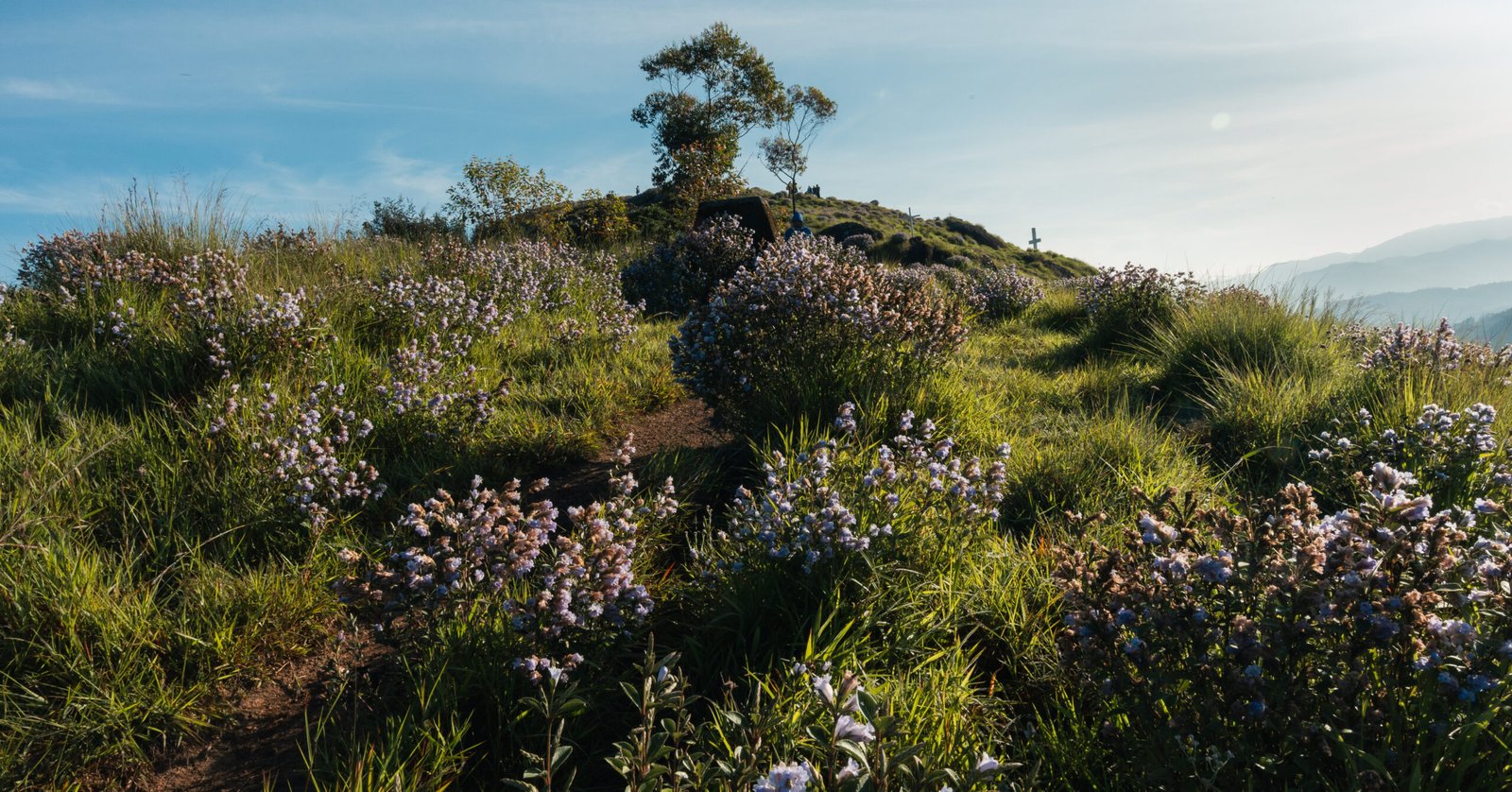
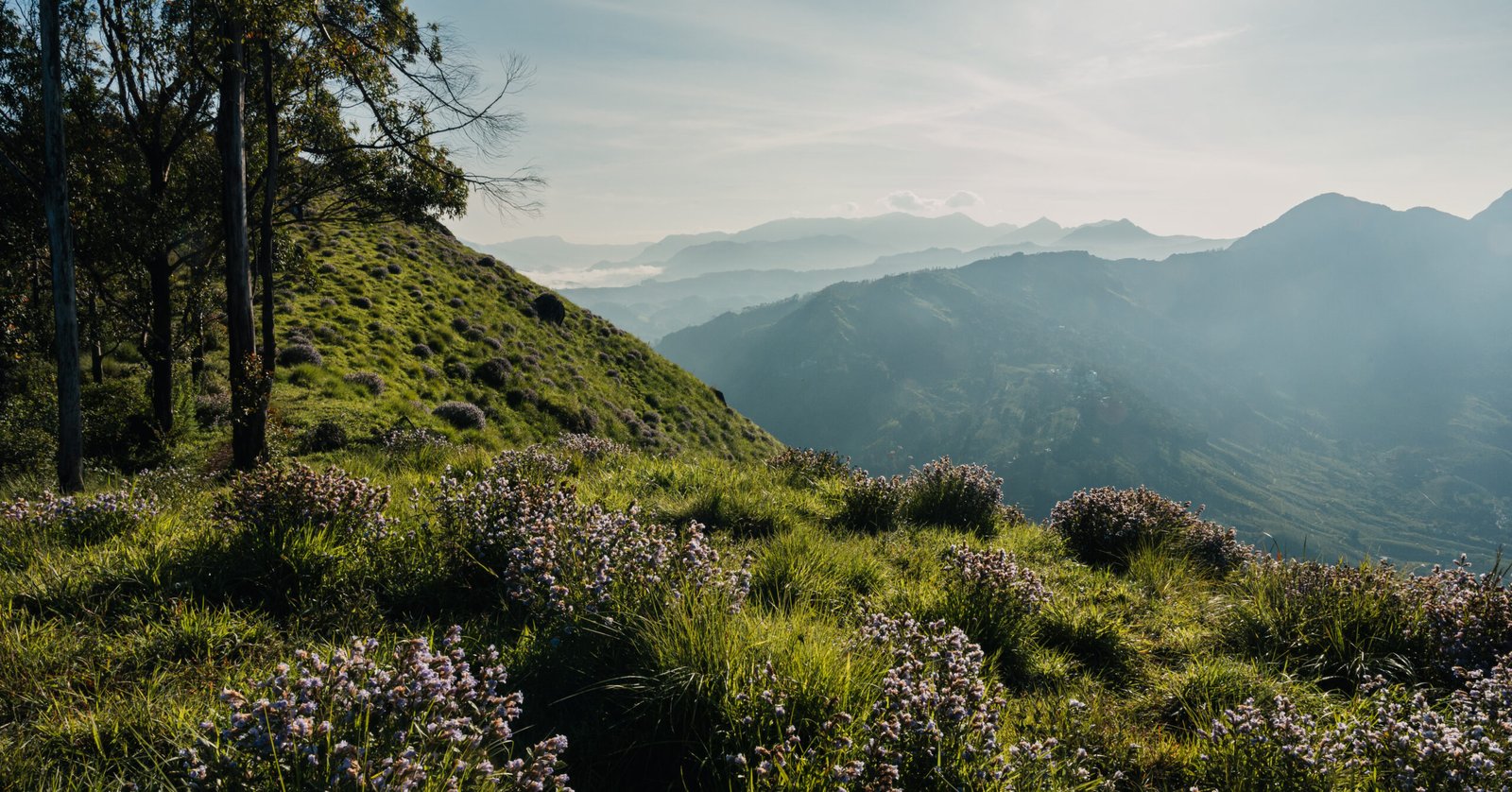
Neelakurinji is a short, bell-shaped flower in purple-blue shades that has a unique blooming pattern. It blooms every twelve years and is endemic to the Western Ghats of Tamil Nadu, Keralam, and Karnataka. The plant has coarse leaves and reddish branches. The flower has no fragrance. But bees and butterflies come for the nectar and help the plant’s reproductive function. They grow in clusters, causing them to form an umbrella canopy.
Neelakurinji’s scientific name is Strobilanthes Kunthiana. It’s a shrub that belongs to the bear’s breeches family. It grows at an elevation of 1300 meters to 2400 meters. It has a height hovering between 30 and 60 cm. Its purplish-blue flower gave the Nilgiri Mountaims it’s name( nil means blue and giri means mountain). The first documented Neelakurinji blooming was in 1838.
Do you know why she waits for a long twelve years to bloom? It is to bring her offspring into this beautiful world. It is for procreation. This phenomenon is semelparity. That is a type of communal bonding in which the reproductive cycle of the flower has a synchronised blooming. Neelakurinji is a Semelparous species. So it produces seeds only once in a lifetime and then dies. It dies after it fulfils the purpose – procreation.
This twelve-year dormant phase helps the neelakurinji to collect and accumulate the resources for the next mass seeding.
In the Sangam literature, Kurinji nilam is one of the five ecosystems- the place high up on the mountains. There is another legend regarding the neelakurinji among the Muthuvan tribe: Murugan, the God of the Mountains, garlands the neck of Valli, a woman of the Muthuvan tribe, with kurinji blossoms.
The indigenous Muthuvan tribe shares a close bond with Neelakurinji. Traditionally, they depend on Kurinji cycles to calculate age, birth, important events, and generations. For them, the bloom is a reminder of time’s passage.
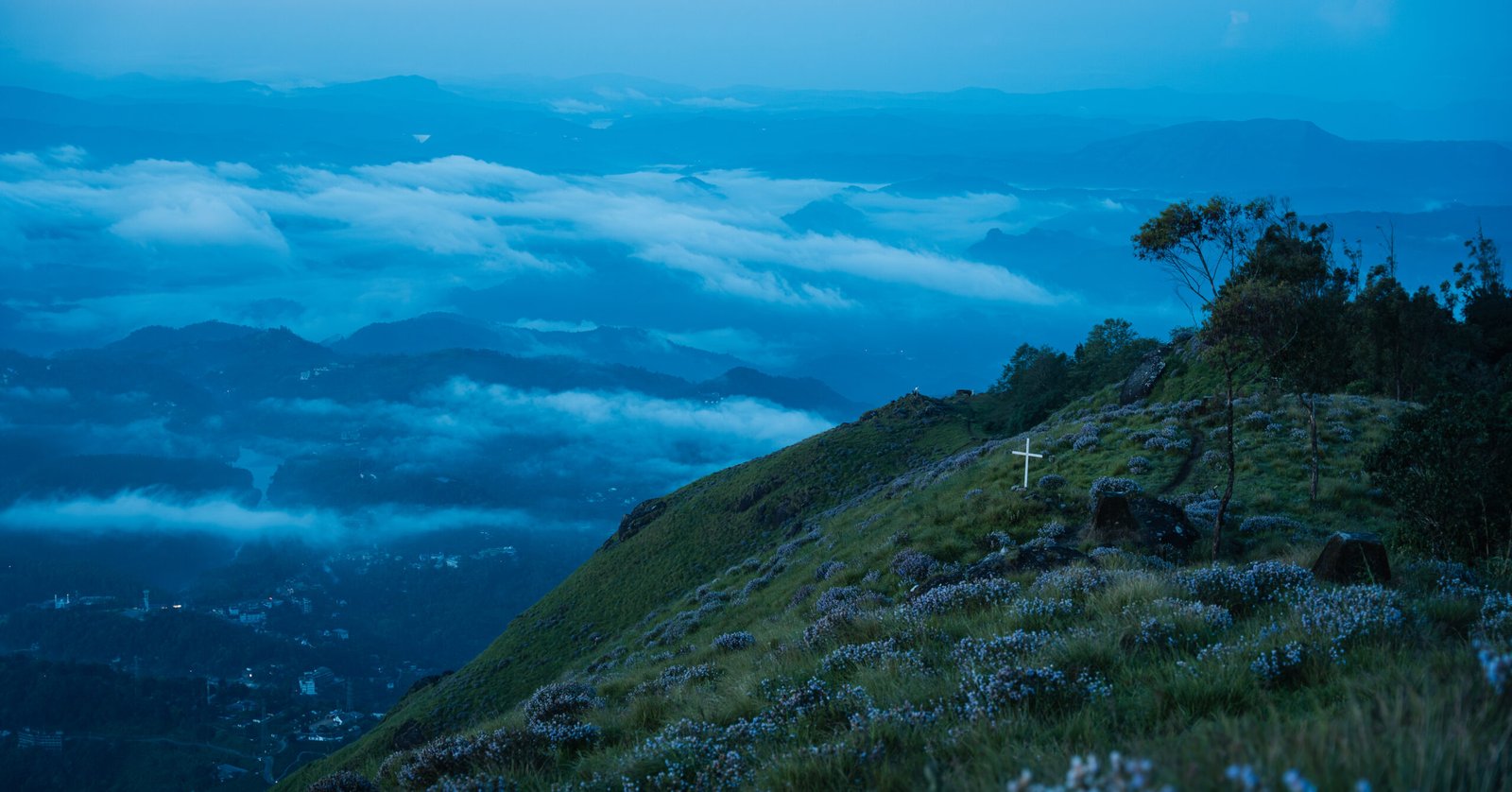
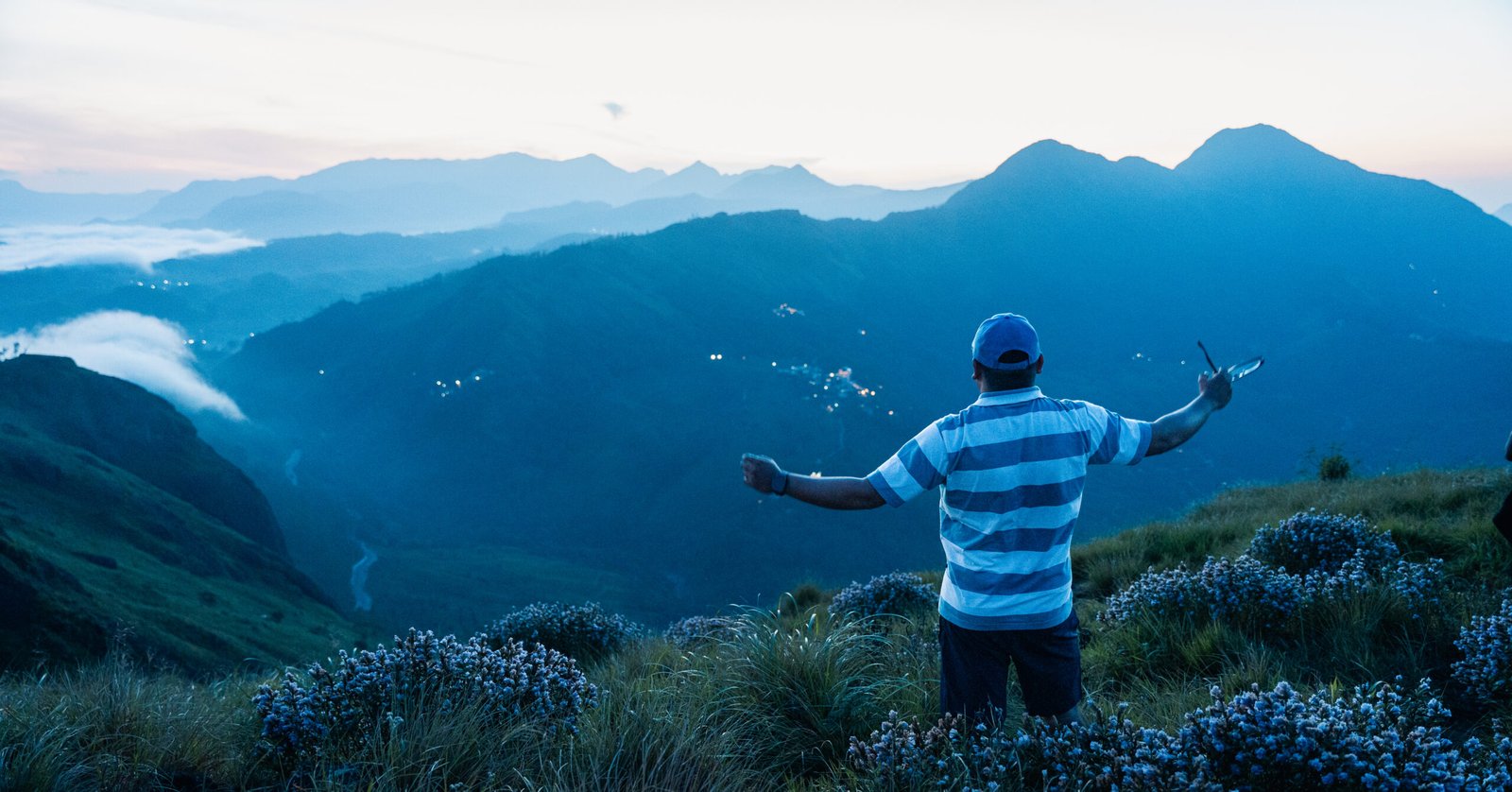
The misty hill station becomes a beguiling beauty during the Neelakurinji season. Nature turns blue here. The bloom happens during September- October, depending on the climate. The slopes and hills where Neelakurinji blooms become ethereal. If you are planning a Neelakurinji trek, the view at the summit is the highlight. You will not trade it for any other fortune in the world- the cloudbeds and the mountain merge one and exude a blue aura at the top.
The blooming has ecological significance. The flowers entice pollinators and ultimately help in the reproduction of various plant species. As there is dispersal of seeds, it ensures the plants’ regeneration.
Neelakurinji is endemic to the Western Ghats in Kerala, Tamil Nadu, and Karnataka. Munnar is the most sought-after destination to witness Neelakurinji blooming in Kerala. You can witness the bloom on the slopes of Chokramudi, Lakshmi Hills, Top Station, Korandakkad/Mattupetty, and Eravikulam National Park.
Trekking at sites where you do not have the forest department’s permission is not advisable because of the safety concerns. The terrain can be slippery and steep, causing accidents. Moreover, you should not pluck the flowers. Be a responsible tourist to protect the ecosystem.
Get a pair of anti-skid trekking shoes to ease the climb, especially at places like Chokramudi and Lakshmi Hills. An early morning trek is the safest option, as it will save you from the sweltering heat of the sun. Make sure to drink enough water before and during the trek.
Munnar has a lot of stay options, including resorts and hotels. The Leaf Munnar Resort has the advantage of proximity to the Neelakurinji blooming sites.
The nearest railway station you can get off at is Aluva. It is about 110-120 kilometres away. The nearest airport is Cochin International Airport, which is again roughly 110 km away. Once you land there, you can hire a cab and reach Munnar in about 3 to 4 hours. On the go, you can take in all the beauty of the winding scenic routes of the Western Ghats.